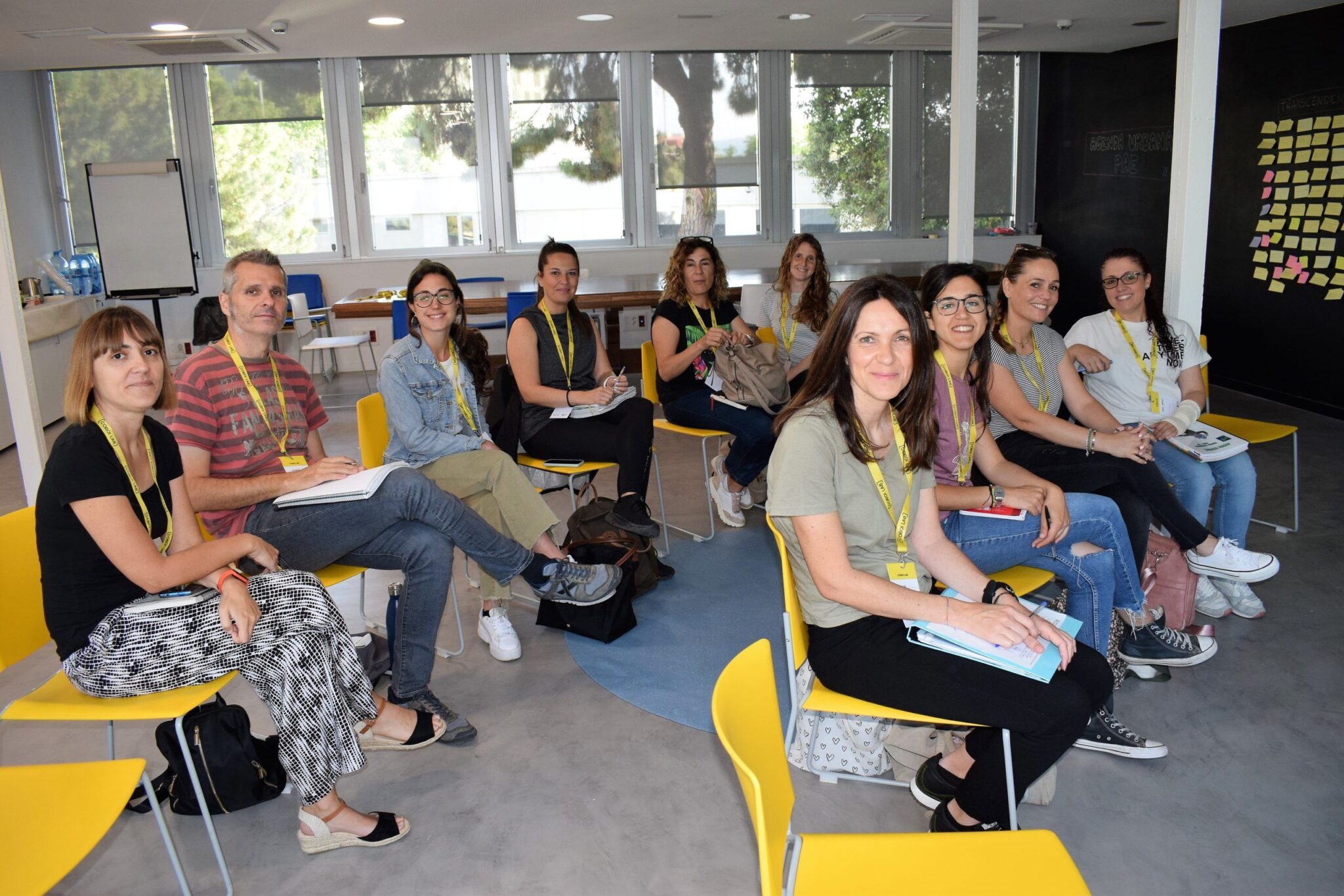
Training on the 4>17 Method for the Educational Services of Baix Llobregat
On Friday, June 2, we held a training session on our methodology, the 4>17 Method, for the heads of studies of schools in Sant Boi de Llobregat and Santa Coloma de Cervelló.
Our collaboration with the Baix Llobregat III Educational Service dates back to Coboi lab’s participation in the ComFluïm conferences, a shared learning space and an opportunity to strengthen the educational community. It was then that they became interested in our methodology and proposed that we provide training to teachers, with the aim of providing tools to face challenges collaboratively.
The session was divided into two main blocks. The first was a theoretical part, where we explained the origins of the 4>17 Method, the inspirations behind it, how to interpret the framework, and the structure of its phases and subphases. This was followed by a practical session, where participants experimented with and applied two of the worksheets previously discussed in the theory section.
In summary, it was a productive session in which we trained 16 heads of studies from various schools in our methodology. As a next step, we agreed to hold a follow-up session at the beginning of the next academic year to discuss, reflect on, and resolve any questions regarding the application of the 4>17 Method.
Last Friday, June 2, we held a training session on our methodology, the 4-17 Method , for the heads of studies of schools in Sant Boi de Llobregat and Santa Coloma de Cervelló .
Our collaboration with the Baix Llobregat III Educational Service dates back to Coboi lab’s participation in the ComFluïm conferences, a shared learning space and an opportunity to get closer and create an educational community. It was then that they became interested in our methodology and proposed that we provide teacher training, with the aim of providing teachers with tools to address challenges collaboratively through this innovative methodology.
The day was divided into two large blocks. The first theoretical part, where we explained where the assignment to develop our own methodology came from, what our inspirations are, how to read the Method, the explanation of the phases and subphases, etc. Followed by a practical part, where we were able to experiment and carry out two of the worksheets that had previously been explained in the theoretical part.
In summary, it was a fruitful day where we were able to train 16 study leaders from different centers in our methodology. For the next steps, we agreed that there would be another session at the beginning of the next school year where we could talk, debate and resolve possible doubts in the application of the 4-17 Method.
[Proposed]
Offer teachers tools to address challenges collaboratively through this innovative methodology.